On Christina Aguilera, Stripped, and Growing Up with the Raunch Culture of the 2000s
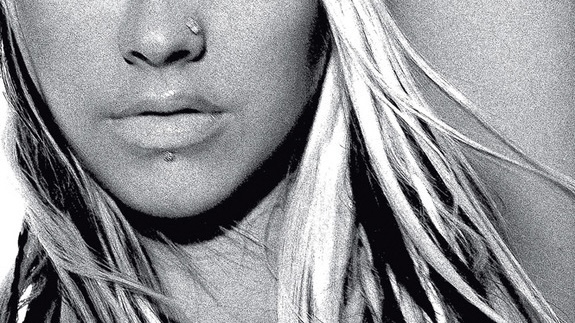
Stripped begins with a twenty-two-year-old Christina Aguilera reintroducing herself to her listeners. For all the cacophony of Y2K synthesizers and overlaid newscasters speculating on yet another scandal – part distorted descent into another dimension, part surround sound cinematic opening – the album’s first track is surprisingly subdued. With very little fanfare the singer informs us that she will be speaking her mind and showing us how she really feels. There will be no hype, no pretense. Just Christina, stripped.
The year is 2003 and the singer’s fourth album practically lives in the little blue boombox perched beside my bed, guzzling eight D batteries every time I inevitably forget to plug it in. I’m thirteen; I’ve just started high school. Without the buffer of a junior high, I’ve left the safe confines of a sheltered elementary school for the lawlessness of the local “party” high school. I sit and listen to the music on a pink and green comforter under a recently tacked up Orlando Bloom poster and my killer whale light switch plate, reeling from the culture shock and my own roiling hormones.
Stripped is in many ways the best musical example of a star’s dramatic public break from her child persona. For all that my white, middle-class childhood lacks in resemblance to the realities described in the album, it is my guide through the transition from kid to teen. I have experienced neither the romantic manipulations of “Walk Away” nor the domestic violence of “I’m OK,” instead my main hardship is a truly dizzying array of unrequited crushes, yet Christina’s music is what best reflects the overwhelm I feel at this age. Stripped is an outlier as I shed the Canadian pop punk of Avril Lavigne and Sum41 for a Cool Girl blend of grunge and seventies rock, but it is the perfect balm to soothe the mundane cruelties of early adolescence. It’s the music I turn to, and return to, as I navigate the eighth grade.
—
High school is exciting; there’s no denying that. Part of me is exhilarated by these new freedoms: my own locker, a class schedule that I’m responsible for maintaining, the solo bus ride home. It’s also a time captured in the diary I keep from the ages of eleven to fourteen. Modelled after Meg Cabot’s Princess Diaries series, the diary spans two ratty notebooks and is filled with direct address entries in blue ballpoint pen that describe events as they happen, with timestamps separating moments stolen during classes and between chores. The result is an intriguing primary document, an artifact left by someone I no longer fully recognize but who keenly needs to make sense of her world.
In one entry, I recount my attendance at the first dance of the year: “At 1st I felt really out of place ’cuz I like can’t dance at all, but then I let loose. And when I say let loose, I mean let loose. I mean ass-shaking, etc …” My first impressions vary: grinding is “not that gross,” the strobe lights provided by a local radio station are “really annoying,” the event’s two-hour duration is insufficient, “cuz for some ppl (me) it takes almost an hour for the ice to break.” Nevertheless, I dance with four boys, with at least one awkward encounter undoubtedly soundtracked by Christina herself, and consider the evening a triumph.
The five-time platinum Stripped is also wildly successful. There are, of course, the expected hysterical reviews: Entertainment deems Christina “desperate and shrill,” Brandweek worries about her “self-imposed exile [to] Skankville,” and Time finds her look perfect for an “intergalactic hooker convention” (a description that begs several questions, namely “What planet hosts this convention?” and “Can I go?”). But the five singles that appear on the Billboard Hot 100 and the album’s five Grammy nominations handily drown out any negativity.
Via Billboard, Christina declares that she and her new “Xtina” persona are just “being a little brash and having fun with it,” explaining that by grabbing attention first with “Dirrty” and then “hit[ting] them with the one-two punch of ‘Beautiful’ next, and ‘Fighter’ … you realize it’s all done with a purpose.” Christinais clear in her album promotion that she’s “showcasing the many sides of being a strong woman: a little bit of owning your sexuality, being able to be vulnerable and owning your vulnerability, and then being able to stand up for yourself and own your past.”
It’s a multifaceted approach that’s undeniably effective, and for a young girl looking for confidence and validation, the album is fertile ground. From the well-known singles “Can’t Hold Us Down,” “Fighter,” and “Beautiful,” to deeper cuts like “Soar,” “The Voice Within,” and “Keep On Singing My Song,” self-empowerment is an endlessly malleable theme, and one of which I am in desperate need.
Indeed, by September 29, I am already well and truly disillusioned with my surroundings: “You know, I hate society, I really do. I hate how women are objectifyed [sic] but they still do it because they like the attention. I hate how guys think they’re so cool when they have like, 3 girls, and, I’m not saying it’s right to do that, but if a girl does it, she’s labelled a whore. I hate how if you don’t wear really revieling [sic] clothing, guys don’t notice you.”
It’s a proto-feminist ethos cribbed straight from the album, the hip hop and R&B Lil’ Kim joint “Can’t Hold Us Down” in particular. Christina belting out a manifesto about gendered double standards and slut shaming has clearly made an impact but, while her conclusion is celebratory, my outlook is markedly less rosy. “The worst part is, I can’t change any of it, because there’s only one of me, and a whole batallion [sic] of people who like it the way it is. Ah life! Why must thy be littered w/ frustration & disapointment [sic].” We can blame a Shakespeare-forward Enriched English class for this last affectation.
In The Second Sex, Simone de Beauvoir describes the pubescent girl as someone who “feels that her body is getting away from her.” She writes, “it is no longer the straightforward expression of her individuality; [the body] becomes foreign to her; and at the same time she becomes for others a thing: on the street men follow her with their eyes and comment on her anatomy. She would like to be invisible; it frightens her to become flesh.” I had by this point already become such an object, such flesh, my existence dotted with construction crews stopping their work as I passed, bus drivers leeringly telling me I didn’t have to pay the fare – events so confusing to a child they don’t appear in my diary even as they’re forever etched in my memory.
By 2003, I hardly need the lessons of “Soar,” in which powerfully uplifting piano chords give way to a much more somber bridge. Christina’s soft falsetto channels de Beauvoir while telling of a girl who comes face to face with her fears in the mirror, her “own reflection now foreign to her” after years of trying to become someone else. By this point, the world is already reflecting someone different back at me, more grown, more trapped, and unlike Christina, I don’t have a gospel choir arriving for a last verse and triumphant finish. The world I’ve entered into is much more explicitly sexual than the one I’ve so recently left, and I find myself wholly unequipped for it. I’m not at risk of losing my sense of self, but rather bewildered to see that self reflected back in ways I do not recognize and do not want.
“I didn’t tell u about the thong incident,” I write on October 8, “[w]e were in drama and Scott told me I should wear a thong. Yes he did, I’m not kidding.” It’s an order couched in all the reckless ownership thirteen-year-old boys feel for the bodies of thirteen-year-old girls. I respond with “Y should I make myself suffer by wearing a kind of underwear no ones going to c anyway?” Scott’s retort, “you have to suffer to be sexy,” is met with an eye roll in the moment and a “what nerve!” in the diary, yet I’m left deeply conflicted.
I’m growing up in what psychologist Mary Pipher, in Reviving Ophelia: Saving the Selves of Adolescent Girls, terms a “girl-poisoning culture.” The 1994 book was read and annotated by my mother as I was coming into my teenage years. Reviving Ophelia charts an increasingly sexualized and media-saturated culture and its effects on pubescent girls, whose wholeness is at risk of being “shattered by the chaos of adolescence.” For Pipher, it is especially “bright and sensitive girls [who] are most at risk” of this splintering, who are most likely “to understand the implications of the media around them and be alarmed.” (Thanks for highlighting this passage, Mom.)
Pipher continues: “They have the mental equipment to pick up our cultural ambivalence about women, and yet they don’t have the cognitive, emotional and social skills to handle this information … They struggle to resolve the unresolvable and to make sense of the absurd.”
As I enter high school, I am – to paraphrase a different popstar – not a girl, and not yet interested in being a woman. At least not like I see them in the world.
–
A Rolling Stone review that comes out in late 2002 calls Stripped “almost an album for grown-ups,” and months later I continue to inhabit a similar space. At 6:25 p.m. on September 21, 2003, I revel in the fact that “Mom says she doesn’t like my new eyeliner on me.” I’m incapable, however, of fully embodying the rebellious teen. Although her disapproval bodes well, I still cling to a childish relationship with my parents, one that is as present and obliging as it is trying to be combative and disengaged. I might be glad that my mother says the eyeliner “makes my eyes too dark,” but in the same breath I nevertheless “G2G make hors-d’oevres [sic]” for a dinner we’re about to host, a chipper little helper in aspirationally dangerous makeup.
In this space after childhood but before adolescence, I am caught in a terrifying no man’s land between warring impulses. Wanting to be desired by my peers but terrified of what that desire might imply, my behaviour can’t always be justified. About an hour before disclosing the thong incident, I write that: “[J]ust so you know, I’m not talking to Jin Soo [on MSN Messenger] anymore cuz last time I did we were having a very enjoyable conversation until right b4 he left, he asked if I would ‘do it’ w/ him if I was old enough! Sorry, but I will not keep talking to a guy who just asked me if I would want to have sex w/ him! So I blocked & deleted him.”
It’s a reaction that puzzles me now. I had a crush on this boy, who had posited a fairly harmless and unlikely hypothetical scenario. Surely some sort of reprimand would have been enough to end the conversation. But thirteen-year-old me finds this sort of gaze terrifying – “I know guys get horny and stuff, but still! I mean, it’s never been about me. *shiver*” – and lashes out.
I’m not the only one feeling at once desiring of, yet threatened by, this new sort of attention. That same day I recount how “Amin supposedly has a crush on Paige and supposedly once you get to know him, he’s really creepy and stalkerish. Anyway, she wants him to go away, so next time he talks to me, I’m supposed to tell him that Paige wants him to ‘Fuck off.’” My friend was experiencing unwanted attention, clearly, but one with a doubled edge: “Also, this other guy, Thomas, asked her out. She said no (of course), but now she can’t groan about no one liking her! She’s really starting the year off well, isn’t she? Unlike some ppl (me).” The irony is not lost on me that I whip from support for Paige to being jealous of the romantic interest paid to her, all while seemingly unable to connect my MSN escapades to her situation. Half a century earlier, de Beauvoir calls this a “diffuse hopefulness,” a desire that lives in “ideal mists” rather than in the “hand, mouth, and flesh” of another real person. In the moment, however, it feels more hopeless than anything else.
“This is the trait that characterizes the young girl and gives us the key to most of her behaviour,” writes de Beauvoir, who continues: “She does not accept the destiny assigned to her by nature and by society, and yet she does not repudiate it completely; she is too much divided against herself to join battle with the world.” It’s a perfect description for the version of me who instinctively does not want to become a sexual object but wants boys to like her, who wants to shock her parents but will help them arrange appetizers prettily on a plate. “Each of her desires has its corresponding anxiety,” says de Beauvoir, explaining the paradox of this age: “She is eager to come into possession of her future, but she dreads to break with her past; she wants to ‘have’ a man, but she does not want him to have her as his prey.” I’ll learn a darker truth years later. The underlying story of that first dance where I feel so uninhibited is that a group of grade twelve boys have made a bet to see who can have sex with a grade eight girl. I may not be consciously aware of this predatory gaze while enjoying my newfound “ass-shaking” capabilities, but at least some part of me can sense the underlying threat that permeates much of my world.
—
At thirteen, I need the complexities of Stripped. If the album had been only the beguiling Latin pop of “Infatuation” or the beguiled neo-soul of “Loving Me 4 Me” it wouldn’t have been able to contain the full scope of my feelings. Neither would the heartening gospel of “Keep on Singing My Song,” nor the equally righteous anger of the flamenco-rock track “Makeover,” have been able to singlehandedly hold my interest. At thirteen, I need to be seduced by “Walk Away,” gassed up by “Underappreciated,” and held by “The Voice Within.” At thirteen, I need to be hardened by “Fighter,” to know that every slight – real or perceived – has the potential to make me that much stronger, harder, and wiser.
“Fighter” is a testament to how unfair the world can be, from the single’s first line that Christina all but growls out to the guitar-heavy crescendo that punctuates the “you, can’t, stop, me” of the bridge before splintering into echoing voices that come together only to vow that they’ve had enough. The music video, too, showcases a uniquely feminine ability to recover and rebuild after adversity, with director Floria Sigismondi’s signature desaturated goth style that borrows liberally from post-grunge aesthetics. In a loose interpretation of the moth’s lifecycle, every step Christina takes in the video, from escaping a glass cocoon to removing insect pins from her back, brings her closer to her final form. She then emerges as a silky, ethereal creature somewhere between pupa and adult moth, and in full possession of the knowledge that she is capable of pulling through.
If “Fighter” shows me anything, it is that there can be strength where there is fragility; it’s something songwriting titan Linda Perry, responsible for several of Stripped’s tracks, puts to use throughout the album. “I know it sounds ghoulish,” Perry will later divulge when discussing the deeply personal “I’m OK,” “and she didn’t think she could do it, but I made her do the song in tears.” A chronicle of Christina’s father’s physical abuse of her mother, “I’m OK” is a moment of gut-wrenching vulnerability. The singer’s vocal grain is raw and wounded as she sings, unable to stand, from the recording studio floor; it is Perry in particular who fights for this lack of polish and painful emotionality to remain in the songs’ final versions.
Even the spoken instruction to “look away” that opens “Beautiful” is a candid moment and a glimpse at Christina’s shyness: she tells the friend who has accompanied her into the recording booth for support that she can’t bear to be observed. Much ink has been spilled on the Grammy Song of the Year–nominated “Beautiful,” on its beauty and on the importance of a song so unreserved in its love for its listeners, and it’s the first sung line in particular that I always return to. The immediate heel turn from Christina’s day being wonderful to the singer finding it hard to breathe rings so true for me in this period of constant hormonal change. In one moment, I am incapable of finding a redeeming quality in myself, and in the next I am my own staunchest defender.
“I am the most stupid, pathetic, thick, dum [sic], crappy, imbecilic, idiotic, not intelligent, crazy, insane, stupid, stupid, stupid excuse for a teenage girl,” I write in early October. I have just told a boy that I like him, and it has not gone well. In this moment, I can only reproach myself for the ill-advised admission. Two hours later, however, I’ve mulled over the situation and decided that his reaction, of looking me up and down before uttering a single, devastating “ew,” is unacceptable. I am incensed: “And the ironic thing is, I still like him. Yup, that’s right, I still like the complete imbecile that told Magda I was ‘too smart for him.’ Ha! Damn right, I am!”
“Girls become fragmented,” writes Pipher, “[t]hey are confident in the morning and overwhelmed with anxiety by nightfall.” Christina, at least, can keep up with my wild incongruities, seems to understand the need to feel sexy, despairing, thrilled, furious, sometimes all in the same hour, sometimes all in the same album. Not fragmented, then, but refracting every possibility.
—
My well-thumbed copy of Cosmogirl! magazine’s March 2003 issue serves as a template for how I’ll come to think about Stripped-era Christina, that month’s cover model. The article features a large close-up of the singer’s bared back – her contrapposto stance adorned with only a backless sequined shrug, geometric gold earrings, and boldly scripted Xtina tattoo. Across from the photo, the magazine pronounces that they “have a strong suspicion that the new look, the clothes (or lack of !) are all a part of an ingenious plan – a mask, her way of protecting her inner self from an industry that thrives on gossip and ridicule.” It’s a fundamentally sympathetic profile, one that acknowledges a certain overexposure but frames it as preventative oversharing designed to create distance between the public persona and the real person beneath it. “It’s as if she’s thinking, Here! Here’s something to talk about,” the profile declares, doing some of Christina’s image-building for her before continuing, “[w]hile you’re ripping me to shreds on these surface things, I’ll be over here figuring out who I am, like every other 22-year-old.” In this interpretation, the new persona is just smokescreen, a distraction from the real person busy finding out who they are.
Cosmogirl!’s position is one that is unexpectedly understanding, but one unfortunately overwhelmed by the cognitive whiplash of the 2000s – as demonstrated in miniature by the teen magazine’s coverlines. The issue’s main promise to let its readers “Find Out Who [Christina] Really Is” is easily drowned out by other, bolder coverlines. “Get Flatter Abs In Two Weeks!” and “be a great kisser (here’s how)” vacillate between promise and command; “ARE YOU SEXY? see page 42” dispenses with any pretence altogether. The profile’s second accompanying photograph features Christina pulling back her black-and-blonde hair (with its mess of half-hearted braids) to reveal the beginnings of a confident snarl. The rest of the image, however, is a full-body shot complete with tall boots, minuscule shorts, and a large swath of lower abdomen that fits right in with the rest of the issue’s exhortations to achieve the “perfect look.”
In 2005’s Female Chauvinist Pigs, Ariel Levy acts as cultural anthropologist for the newly risen phenomenon she calls “raunch culture,” a Playboy revival– meets–Girls Gone Wild moment with which I’m all too familiar. For Levy, raunch culture “isn’t about opening our minds to the possibilities and mysteries of sexuality. It’s about endlessly reiterating one particular – and particularly commercial – shorthand for sexiness.”
According to Levy, raunch culture combines backlash against the perceived prudishness of second-wave feminism with the rise of salacious reality television and increased access to internet pornography. The hyper-sexualized and hyper-gendered phenomenon then provides the perfect opportunity to promote – and commercialize – one homogenous way of being, a culture that Levy believes does a particular disservice to teenagers:
“By any measure, the way we educate young people about sexuality is not working. We expect them to dismiss their instinctive desires and curiosities even as we bombard them with images that imply that lust is the most important appetite and hotness the most impressive virtue. Somehow, we expect people who are by definition immature to make sense of this contradictory mishmash.”
As I attempt to become a sexual being at the height of raunch culture’s power, I certainly cannot find my way out of the contradiction. I do, however, feel a growing need to explore romantic and sexual desire. The song “Get Mine, Get Yours,” for example, strikes me as thrillingly risqué – something that likely says more about my young age than anything else. Christina wanting to have her sex life resemble a nine to five job is so lacking in eroticism that it could only ever have appealed to a thirteen-year-old ignorant of both sex and full-time employment.
I want to submerge myself in the album’s more pleasurable moments, to share in Christina’s first loves and deep connections. But something prevents me from fully embracing the contagious certainty with which she preaches her Shout Out Loud philosophy in songs like “Can’t Hold Us Down.” I can’t help but notice that in the music video Christina herself wears the same sort of small velour outfit that sets my teeth on edge when donned by my classmates. How loud can a message of rebellious desire ring when it comes from a place of adherence?
The music video for “Dirrty” is the flashpoint for this conflict. The song is in many ways a reclamation of power. Christina has paid her dues and she’s in the mood for some fun. A sequel of sorts to Redman’s “Let’s Get Dirty (I Can’t Get in Da Club),” here Christina can, and does, revel in a night of hedonism and reckless abandon. I will always have a soft spot for “Dirrty.” Everything works for me,
from the beat that samples multiple elements of Redman’s original, to the rapper’s none-too-serious guest verse, to Christina’s own barn-burning riff that goes on for a full eight count. But there’s a slipperiness to the visual elements – one that doesn’t come from the video’s liberal use of water, sweat, mud, and engine oil – that leaves me ill at ease.
As iconic as the visuals have become – no one will ever see a bikini paired with chaps and not make the association – they play into a voyeurism that doesn’t fully challenge preconceived beliefs about young women’s sexualities. Look beyond the bodybuilders, furries, and contortionists and what’s left is costuming and choreography that feature little, plaid schoolgirl skirts and suggestive glimpses of bright red underwear. Worse is the boxing ring set and the inclusion of posters promoting the sex tourism industry in Thailand. One poster reads “Young Underage Girls,” something director David LaChapelle says was an oversight but is nevertheless indicative of the thoughtlessness with which these gritty ingredients are combined to achieve that perfect 2000s raunch.
Despite Christina’s lyrics about wanting to get dirrty and get hers, she can’t teach me how to authentically connect with my own sexuality. The inherent performativity of popstardom hews too closely to raunch culture’s prioritization of desirability over desire. I know what I must do to be wanted, no matter how much it might chafe. What I don’t know how to do, or rather, what I’m not given permission to do, is want. I can be looked at, not look. I can be acted upon, even set the stage for the acting, but never act myself. However positive the messages in the album’s singles might be, they remain constantly undermined by the corresponding visuals. I am told that the world’s double standards regarding women are cruel (“Can’t Hold Us Down”), that I must fight for myself (“Fighter”) because I am worthy just as I am (“Beautiful”) and deserve to have fun (“Dirrty”), but also that it’s necessary to do it all while never deviating from the standards of hotness of the day. Christina may have her detractors, but Xtina is in many ways raunch culture’s ideal.
By virtue of existing within the music industry, Christina needs to be wanted, needs to court that wanting. Everything else is in service to that external desire. Everything else comes second. Though the media narrative depicts the singer in perfect control of her career, artistry, and sexual image, which empower her and give her pleasure, the fact remains that her decisions are incredibly financially lucrative. A cynical perspective would see the release of “Beautiful,” hot on the heels of “Dirrty,” as image management, a way to mitigate the criticism levied against the hyper-sexual first single. So, how much of the bold and hyper-sexed aesthetic is an authentic desire to shake off an outgrown and undesired little-girl image, how much is a calculated move to differentiate a corporate brand in a Britney-saturated market, and when it comes to the business of pop music, does the distinction really matter?
A couple decades later and I’m now living in a post-Barbie world where frothy feminist empowerment can be found only as long as you ignore the corporate money-making foundations it rests on. There is no way to fully escape consumption – capitalistic or otherwise. But how much freer, not to mention queerer, would my teenage years have been had I not been busy struggling against the rigidity of the sexuality I saw laid out before me? If I hadn’t been so concerned with repudiating what was offered and had had the opportunity to pursue what I newly wanted instead?
Regardless, on November 29, 2003, at 1:36pm, I find myself hating “all the stupid ppl that judge me b4 they know me. I hate the way I don’t fit. Normally, this wouldn’t bother me, except, deep down, I sorta want to fit in.” Throughout the diary, I fluctuate between conformity and rebellion, trying and often failing to find the authenticity that exists between the two.
Then and now, I live in these in-between spaces, and I now find that I have no interest in denying Christina the same halting, not-always-successful attempts at navigating between acceptance and unruliness. Perhaps, I too am guilty of projecting too simplistic an image onto a woman just coming into her own. In one of the album’s quieter interludes, Christina apologizes for being neither virgin nor slut, telling us that no matter how much we dismantle her into easily digestible parts, she will remain whole and complicated. Maybe there, too, she’s speaking to me.
—
Stripped caught me at a curious moment as I moved from boy band to dad rock. I doubt the album would have made the same impact had it come out two years in either direction. It would be the last time I felt connected to Christina, who waited four years before releasing her next album. The jazz and soul–inspired collection, with its mid-century pinup aesthetic and odes to a new husband, resonated less with a teenager in the late 2000s, and by that point my tastes had veered more toward a Franz Ferdinand–flavoured indie rock. Christina went Back to Basics, and I lost interest.
The singer now looks back on the Stripped era as a “rough patch,” telling Rolling Stone that “I was going through a lot of personal stuff. Even my hair color going dark. I was in a dark place.” It almost feels like a betrayal of that moment that meant so much to me. That Stripped acknowledged the darkness while managing to rise above it was powerful, and as much as I’ve searched, I haven’t found that power in the rest of Christina’s artistic output – as much as tracks like “Still Dirrty” try to convince me that some edginess remains.
Even if Christina’s more reserved versions on Stripped are more immediately comprehensible to me, I do owe Xtina my gratitude for sparking a journey of self-discovery that even today I am certainly not finished with. That her message of self-empowerment was at times muddy and ambivalent was, in the end, entirely in keeping with the time and culture she lived in, and I’m increasingly fine with not having all the answers. Looking back at Christina and at my teenage self, I have fond feelings for two people who were willing to keep growing.
Strangely, Christina’s best goodbye comes in the middle of the album. In “Cruz” she is driving away in her car, heat rising as her hand floats languidly through the air. She sings of an inner child who will always be sitting beside her in calm companionship. Christina knows she must leave the past behind, not to escape but to flourish in ways that are as yet unknown. Thirteen-year-old me didn’t know exactly what she wanted either, but she knew there must be more out there. Two decades later and I’m still on the same beautiful ride, still searching – and that child is surprisingly good company.
__________________________________
First published in The Bimbo Feminist Anthology (Purple Ink Press, 2025).

